Is my house freehold or leasehold? A handy guide to freehold and leasehold land
When buying or owning a home in England and Wales, one of the first legal questions to ask is whether the property is freehold or leasehold. Understanding the difference between freehold land and leasehold land is essential, as it affects your rights, responsibilities, long-term costs, and control over your property.
In this handy guide, HSR Law explains what freehold, freehold property, freehold land, leasehold, leasehold property, and leasehold land really mean, and importantly, how to check which one applies to your home.
What does freehold mean in property law?
A freehold is the most complete form of property ownership recognised under English law. If you own a freehold property, you own:
- The building itself; and
- The freehold land it stands on.
Ownership lasts indefinitely, with no time limit. This is why freehold is often viewed as the most secure and straightforward form of ownership.
Rights and responsibilities of freehold owners
If you own freehold land, you are generally responsible for:
- Maintaining the structure of the property;
- Repairing roofs, walls, and foundations; and
- Complying with planning laws and restrictive covenants affecting the land.
There is no landlord, no ground rent, and no lease to renew. However, freehold property can still be subject to legal restrictions, such as rights of way or covenants imposed by previous owners.
A restrictive covenant is a legal obligation written into the title deeds of a property that limits how the property or land can be used. For example, it may prevent you from building additional structures, running a business from your home, or altering the property’s appearance. Both freehold land and leasehold land can be subject to restrictive covenants. Breaching a covenant can lead to legal action, so it’s important to check the title deeds or seek legal advice from a conveyancing solicitor before buying or making changes to your property.
What does leasehold mean in property law?
A leasehold means you own the right to occupy a property for a fixed period of time, granted by a lease. The land itself remains owned by the freeholder (also known as the landlord).
A leasehold property might be a flat, maisonette, or (less commonly) a house. The lease sets out:
- The length of the lease (for example, 99 or 125 years);
- Ground rent payable to the freeholder;
- Service charges; and
- The obligations of both parties.
Leasehold land explained
With leasehold land, you do not own the land outright. Instead, you have a legal interest in the property that diminishes as the lease term shortens. Once the lease expires, ownership returns to the freeholder unless the lease is extended or the freehold is purchased.
When the lease on leasehold land expires, ownership of the property reverts to the freeholder unless the lease is extended or the freehold is purchased. This means you no longer legally own the property, even if you’ve lived there for many years. Leaseholders often have the right to extend their lease or buy the freehold, but these options require planning, legal advice, and sometimes negotiation with the freeholder. Understanding your lease length and options early is essential to avoid losing long-term value.
What is the difference between freehold land and leasehold land?
Understanding the difference between freehold land and leasehold land is crucial for anyone buying or owning property. While both types of ownership give you legal rights over a home, they differ in how much control you have, the costs involved, and how long you can occupy the property. The table below highlights the main distinctions to help you see which type of ownership applies to your home.
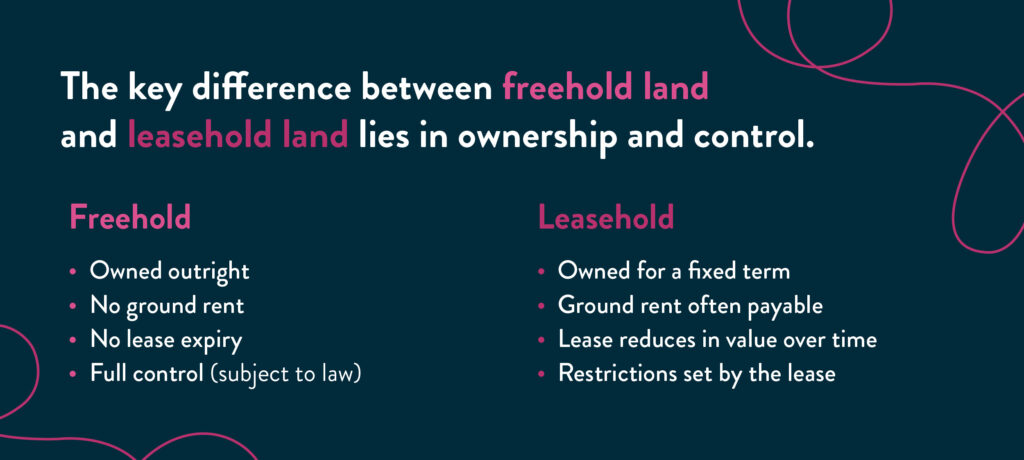
In practical terms, freehold owners usually have greater autonomy, while leasehold owners must comply with lease terms and may face additional costs.
Is my house a freehold or leasehold property?
Many people assume houses are always freehold, but this is not always the case. Some houses are sold as leasehold property.
You can check whether your house is freehold or leasehold by:
- Reviewing the title deeds;
- Checking your Land Registry title register; or
- Asking your conveyancing solicitor.
The Land Registry register will clearly state whether the title is freehold or leasehold and, if leasehold, the length of the lease.
Why Are So Many New-Build Properties Sold as Leasehold?
While most houses in England and Wales are traditionally sold as freehold property, there have been notable exceptions with new-build houses being sold as leasehold. This was a recognised practice by some developers in the past: for example, government and Land Registry data showed that a significant share of new-build houses used to be sold as leasehold — with industry figures indicating around 14–18% of new-build homes were leasehold around 2016–2017.
The reason this happened is largely commercial. Some housebuilders retained the freehold land and sold the home on a long lease to generate ongoing income through ground rents or later sales of the freehold.
In recognition of the problems this caused, recent reforms, including the Leasehold and Freehold Reform Act, have effectively stopped the practice of selling new-build houses as leasehold in England and Wales and limited ground rents on new leases to nominal levels.
So, although most houses are freehold today, the historical practice of selling some new-build houses as leasehold land means it’s still worth checking your title deeds or Land Registry documents if you’re unsure.
Can leasehold property be converted to freehold land?
In some cases, yes. Leaseholders may have a statutory right to:
- Extend their lease; or
- Buy the freehold (known as enfranchisement).
The right to buy the freehold depends on several factors, including the type of property and how long the leaseholder has owned it. Buying the freehold converts the property into freehold land, removing ground rent and lease restrictions.
HSR Law can advise on whether you qualify and guide you through the legal process.
Which is better: freehold or leasehold property?
There is no universal answer. Freehold property generally offers more control and long-term security, making it attractive to buyers. Leasehold property, however, can still be suitable — particularly for flats — provided the lease terms are fair, and the remaining lease length is adequate.
Understanding the difference between freehold land and leasehold land allows buyers and owners to make informed decisions and avoid unexpected legal or financial issues.
“Choosing between freehold and leasehold property is not just about ownership, it’s about control, long-term security, and understanding your responsibilities. Freehold gives you full control of your home and land, while leasehold can be suitable if you’re fully aware of the lease terms and any associated costs. We always advise our clients to review the legal details carefully before deciding.”
Amy Fields, Head of Residential Conveyancing, HSR Law
How HSR Law can help
Whether you are buying, selling, or already own a property, understanding whether it is freehold or leasehold property is crucial. HSR Law provides clear, practical advice on:
- Freehold and leasehold ownership;
- Lease extensions and enfranchisement; and
- Property disputes and conveyancing matters.
If you are unsure about your property status or need expert legal guidance, contact HSR Law to speak to our experienced property solicitors.


Freehold and Leasehold Land Frequently Asked Questions
Freehold means you own the property and the land it stands on outright, indefinitely. Leasehold means you own the right to occupy a property for a set period of time under a lease, but the land itself is owned by a freeholder. Leasehold owners may pay ground rent and service charges and face limitations set out in the lease agreement, whereas freeholders have greater long‑term control and fewer restrictions.
You can confirm your ownership status by reviewing your title deeds or checking the Land Registry title register for your property. These documents will state whether your property is freehold or leasehold and, in the case of leasehold, how long the lease lasts. A conveyancing solicitor can also help interpret this information and explain your rights.
When a leasehold expires, ownership of the property reverts to the freeholder unless you extend the lease or buy the freehold. Leaseholders often have a statutory right to extend their lease or pursue enfranchisement, but this can involve negotiation or legal advice. Taking action early helps protect the value of your home and avoid complications as the remaining lease term shortens.